
DataSolmu blog
Sustainability Controls Before Assurance
A review of why sustainability reporting needs control discipline before assurance readiness can be credible.
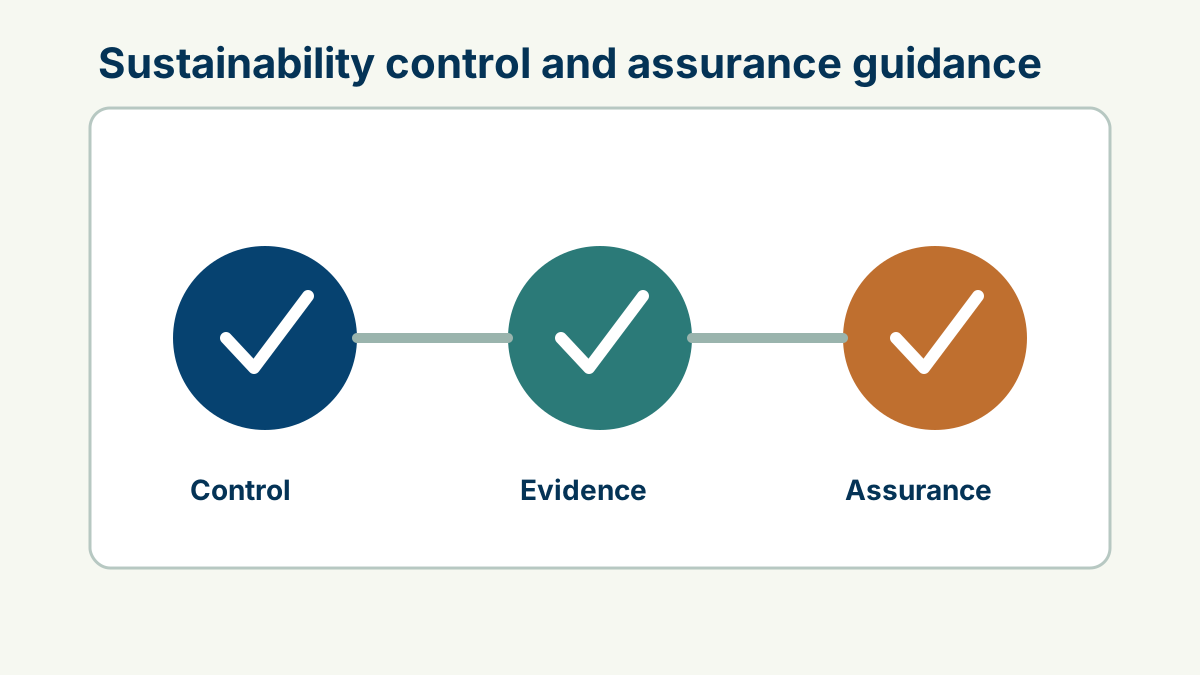
Sustainability assurance does not begin when an assurance provider arrives. It begins much earlier, when the company can show that a reported claim has an owner, a source, a method, a review step, and a record of judgement.
As sustainability reporting becomes more formal, weak controls become visible. A metric that was acceptable in a voluntary slide deck may not be strong enough for a sustainability statement, management report, lender request, or assurance review.
The Control Question
For every sustainability claim, teams should be able to answer:
- What exactly are we claiming?
- Who owns the process?
- What evidence supports the claim?
- Which system, file, supplier response, or document produced the input?
- What method or assumption was used?
- Who reviewed the result?
- What happens when evidence is late, incomplete, or contradictory?
- Can we repeat the process next year?
These questions are simple, but many reporting problems come from not asking them early enough.
Readiness Levels
Sustainability information often moves through four maturity levels.
First, it is unowned: a claim exists, but no accountable owner or evidence trail is clear.
Second, it is documented: an owner and source exist, but review steps and exception handling are weak.
Third, it is controlled: the process has retained evidence, review steps, and repeatability.
Fourth, it is assurance-ready: the company can show method, approval, exceptions, change history, and management responsibility.
Not every datapoint reaches the fourth level at once. The important point is to know where each item stands.
Why Controls Improve Reporting
Controls improve sustainability reporting because they make weakness visible. They show where a metric depends on manual work, where a supplier response is missing, where ownership is unclear, or where an assumption needs review.
This does not only help assurance. It helps management. A controlled sustainability process gives leaders more confidence that reported information reflects the business rather than a last-minute reporting exercise.
Practical Takeaway
Assurance readiness is built claim by claim. Companies should start by asking whether each sustainability statement has ownership, evidence, review, and repeatability. If those foundations are weak, the issue is not only assurance risk. It is reporting governance risk.