
DataSolmu blog
Sectoral Decarbonization Needs Evidence Controls
How SDA-style climate targets turn sector pathways, activity data, emissions boundaries, revisions, and limitations into reviewable evidence work.
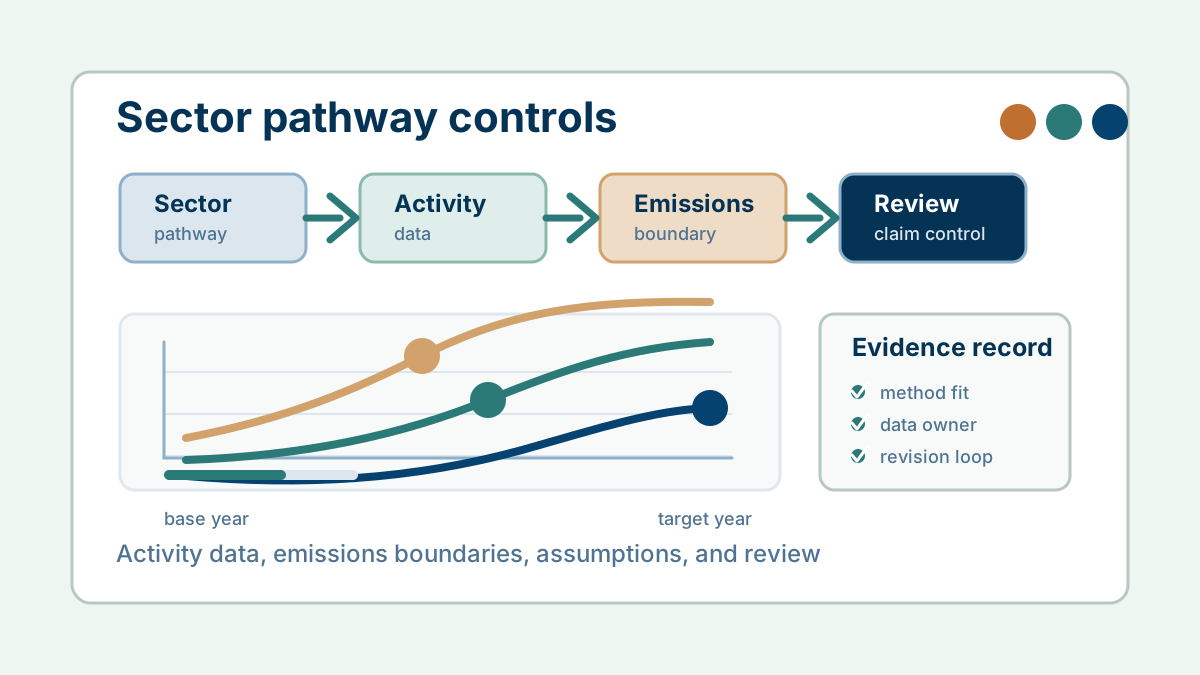
Climate targets become stronger when the target-setting method is connected to evidence. A target can look ambitious on a slide, but reporting teams still need to show which business activities, emissions boundaries, data sources, assumptions, and review controls sit behind it.
The Sectoral Decarbonization Approach, or SDA, is useful because it starts from a sector pathway rather than treating every company as if it had the same route to decarbonization. Energy-intensive sectors, transport, buildings, and manufacturing activities do not all have the same emissions profile or mitigation options.
That makes SDA-style work a good reminder for disclosure teams: a climate target is not only a number. It is a controlled chain from sector context to company activity, emissions data, forecast assumptions, and revision discipline.
Start With Sector Context
Sector context helps a company avoid generic target-setting. A cement producer, an airline, an electricity generator, a chemicals company, and a commercial-property operator will not usually decarbonize through the same activities or at the same pace.
The practical value is not that the sector pathway makes the target automatic. It gives the reporting team a structured starting point. The team still needs to decide which activities are in scope, which data is available, which assumptions are reasonable, and where company-specific facts differ from the sector pathway.
For DataSolmu, this is a workflow issue. The useful record is not just "target approved." It is the route from sector selection to activity data, method choice, calculation review, limitation, owner approval, and public claim.
Check Method Fit
Method provenance matters, but it is not a control by itself. A target-setting method can have technical support, stakeholder input, and tooling, while still requiring a company-specific fit check before it supports a public claim.
That fit check should ask whether the company's activities match the method well, whether the tool inputs are complete, whether the people providing data understand the boundary, and whether the result has been challenged by someone outside the target-setting calculation.
This keeps method choice connected to governance. The company is not only selecting a recognized approach. It is documenting why that approach is suitable for its activities, data, assumptions, and disclosure purpose.
Treat Activity Data As A Control Point
SDA-style target work depends on activity data. That includes identifying relevant activities, choosing base-year activity levels, defining the target period, forecasting growth, and separating emissions by activity where needed.
Those inputs are easy to under-control. A reporting team should not wait until drafting to ask whether the activity forecast changed, whether a business unit was excluded, whether electricity use was projected consistently, or whether emissions have been split cleanly across activities.
A practical evidence record should capture:
- the activity or sector category used for the target;
- the base year and target year;
- the activity metric and source system;
- the growth assumption and owner;
- the emissions boundary and calculation method;
- the reviewer who challenged the assumptions;
- any limitation that affects comparability.
That turns target-setting from a separate technical exercise into part of the reporting control environment.
Keep Emissions Boundaries Visible
Climate targets can become misleading when the boundary is vague. If a company changes what it owns, outsources part of an activity, updates its calculation method, or changes how it allocates emissions across business units, the target story can shift even when the headline number looks stable.
Boundary controls should therefore sit close to the target. The reporting team should know which emissions are included, which are excluded, how electricity-related emissions are handled, whether offsets are outside the method, and which parts of the business depend on estimates.
This is especially important for public disclosure. Readers do not only need the target. They need enough context to understand what the target covers and what would make progress difficult to compare over time.
Build A Revision Loop
Decarbonization pathways depend on assumptions about technology, demand, energy systems, markets, and policy. Company activity forecasts can also change. That means a target-setting method should not be treated as a one-time file that disappears after approval.
The control question is simple: when the assumptions change, who decides whether the target or the evidence record needs to be updated?
A disciplined revision loop can track:
- whether actual activity differs from the forecast;
- whether emissions intensity is moving as expected;
- whether sector assumptions have changed;
- whether the company has acquired, disposed, or restructured activities;
- whether a limitation disclosed in the previous cycle still applies;
- whether the public claim needs narrower wording.
That kind of review trail helps companies avoid stale climate claims. It also gives finance, sustainability, risk, and assurance teams a clearer basis for challenging the target narrative.
Use Limitations As Design Inputs
SDA-style methods are strongest when the company fits the sectors and data assumptions behind the method. They are weaker when activities are mixed, data is immature, boundaries are hard to define, or future technology assumptions are especially uncertain.
Those limitations should not be hidden. They should shape the reporting workflow.
If a method does not cover part of the business well, the team should record how that gap is handled. If a boundary creates a risk of shifting emissions outside the reported scope, the review should challenge that directly. If an assumption depends on future market or technology change, the claim should be written with that uncertainty in view.
The point is not to reject every imperfect method. The point is to make method fit, data quality, and uncertainty visible before the company turns a target into a public statement.
The Varmennappi Perspective
For Varmennappi-style review, the useful questions are concrete:
- Is the target connected to the right sector and activity data?
- Are the base year, target year, growth assumptions, and emissions boundary clear?
- Has someone reviewed whether the method fits the company's business model?
- Are changes in activity, method, or boundary tracked over time?
- Does the disclosure avoid presenting the target as more certain than the evidence supports?
That keeps review support in the right role. It helps teams find weak assumptions, missing evidence, and unclear claims before publication.
Practical Takeaway
Use sectoral decarbonization as an evidence-control workflow, not only as target-setting math. A credible climate target needs a visible chain from sector pathway to company activity data, emissions boundary, assumptions, revision loop, and reviewed public claim.
Source
Science Based Targets initiative: Quick Guide to the Sectoral Decarbonization Approach