
DataSolmu blog
ISSB Regulatory Implementation Needs a Readiness Loop
How ISSB implementation planning becomes scope, readiness, evidence, and review discipline.
Regulatory implementation is where sustainability disclosure stops being an external policy topic and becomes an operating problem. A jurisdiction may be moving toward ISSB Standards, aligning local requirements with IFRS S1 and IFRS S2, building market capacity, or preparing supervisory expectations. Companies still need the same practical answer: what changes for our reporting work, and how do we prove that we handled it?
The useful response is a readiness loop. Regulatory signals should move into scope decisions, roadmap actions, owners, evidence records, review points, and unresolved questions. Without that loop, adoption announcements remain disconnected from the work needed to prepare decision-useful disclosures.
Start With The Implementation Stage
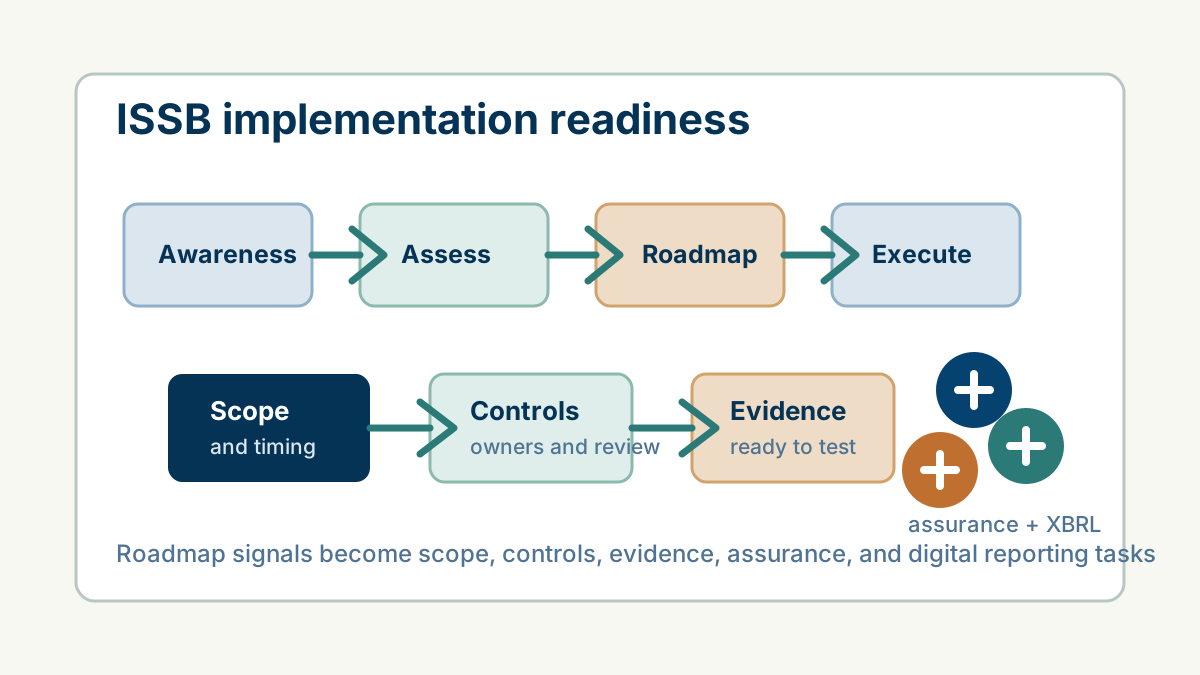
ISSB implementation does not arrive in one neat step. A market can be building awareness, assessing the case for adoption, developing a roadmap, or executing new requirements. Each stage creates different evidence needs for companies.
At the awareness stage, the task is to understand which standards, authorities, market participants, and investor expectations are relevant. At the assessment stage, the task becomes more concrete: what entities could be in scope, what existing reporting practice can be reused, and what gaps are likely. During roadmap development, the company needs to monitor proposed dates, placement, assurance expectations, digital reporting plans, and transition reliefs. During execution, the reporting team needs assigned work, evidence, review, and sign-off.
Treating those stages as a loop helps prevent two common failures. One is acting too late because the requirement is not yet final. The other is building a reporting project around a headline before the applicability details are clear.
Turn Roadmap Features Into Controls
Implementation roadmaps are useful only if they become decisions that someone owns. A reporting team should translate regulatory movement into a small set of controlled questions:
- what legal or regulatory process gives the requirement authority;
- which entities, listings, groups, or market segments are in scope;
- whether the reporting entity matches the financial statements;
- how closely the local requirement aligns with ISSB Standards;
- where the disclosure must appear;
- whether dual reporting, local modifications, or additional requirements apply;
- when the requirement starts and whether phasing or reliefs are available;
- whether assurance, supervision, enforcement, or digital reporting expectations are changing.
These are not abstract policy fields. They shape data collection, review timing, evidence ownership, and claim wording. If the company cannot show who answered these questions and when, the reporting process remains fragile.
Make Readiness Visible
Readiness should be visible before the first reporting deadline. That means the company needs more than a list of disclosures. It needs a record of decisions and dependencies.
A practical readiness view can show:
- applicability confirmed, likely, uncertain, or out of scope;
- requirement status, from consultation to final rule;
- first reporting period and affected entities;
- disclosure placement and governance route;
- data owners and evidence owners;
- open methodology questions;
- transition reliefs reviewed and approved;
- assurance and digital reporting preparation status;
- reviewer comments and unresolved judgements.
This structure helps leadership distinguish between different kinds of risk. A company may have a data gap, a policy interpretation gap, an ownership gap, or a timing gap. Those problems need different responses.
Build Capability Before The Rule Is Final
Capacity building is not just a regulator issue. Companies need capability before requirements harden. Teams need to understand the concepts, the reporting basis, the evidence standard, and the review expectations that may come with ISSB-aligned requirements.
That capability work should include finance, sustainability, risk, legal, internal control, investor relations, and technology owners. It should also cover the practical topics that often determine whether reporting work is defensible: materiality judgements, proportionality, scenario analysis, current and anticipated financial effects, assurance preparation, and digital taxonomy readiness.
For Varmennappi, this is a strong use case for guided workflows. The assistant should not create a filing-ready report or promise compliance. It can help teams spot missing assumptions, unclear ownership, weak evidence, and overconfident claims before those weaknesses reach the public reporting package.
Connect External Support To Internal Ownership
Regulatory implementation often involves public authorities, standard setters, development institutions, professional bodies, assurance providers, technology vendors, and other partners. That support can be valuable, but it does not replace internal accountability.
When a company relies on external training, guidance, templates, or technical assistance, the reporting process should still record:
- what material was used;
- which internal decision it informed;
- whether the material applies to the company's jurisdiction and reporting period;
- who reviewed the conclusion;
- what evidence or judgement remains company-specific.
This keeps external support in the right role. It informs the company response, but it does not become a substitute for the company's own scope assessment, evidence review, or final reporting judgement.
Prepare For Assurance And Digital Reporting Early
Assurance and digital reporting should not be left until the end of implementation. If a jurisdiction moves toward assurance expectations, the company needs evidence that can be tested. If structured digital reporting becomes part of the regime, the company needs data definitions, ownership, consistency checks, and review trails that can support tagging and validation.
The practical question is whether the reporting process can explain each disclosure from requirement to judgement to evidence. A polished narrative is not enough if the underlying records cannot show source data, assumptions, owner review, and changes over time.
The DataSolmu View
ISSB regulatory implementation is best managed as a readiness control loop. The loop starts with external regulatory movement, translates it into company-specific decisions, assigns owners, gathers evidence, tests assumptions, and returns unresolved issues to the right reviewers.
That is the layer where DataSolmu can add value. Sustainability reporting software should preserve the path from external requirement to internal action. It should show what changed, who decided, what evidence supports the decision, and which claims are still unsafe to make.
For assistant-supported workflows, this also creates a clear boundary. The assistant can help review completeness, assumptions, evidence gaps, and readiness status. It should not replace the authoritative source, produce legal advice, or generate filing-ready disclosures.
Practical Takeaway
ISSB implementation should not be tracked as a policy headline. It should be tracked as a controlled readiness loop across scope, timing, requirements, capability, evidence, assurance, and digital reporting. Companies that build that loop early will be better prepared to respond when local requirements move from roadmap to reporting obligation.
Source
IFRS Foundation: Regulatory Implementation Programme Outline