
DataSolmu blog
IFRS Foundation Governance as Reporting Evidence
A practical explainer on why standards governance matters for sustainability reporting confidence.
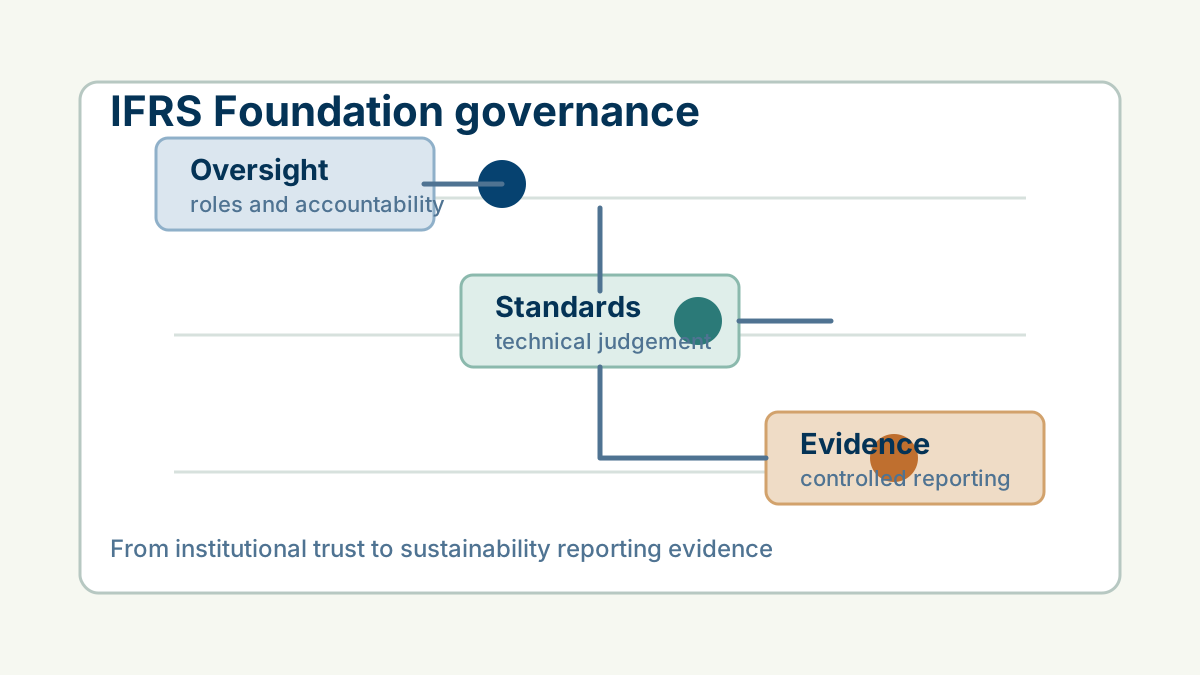
Sustainability reporting standards are often discussed through disclosure requirements: what a company must say, which metrics it must prepare, and how quickly a jurisdiction is moving. Governance is easier to miss, but it matters. A standard-setting system needs visible objectives, accountable oversight, technical boards, advisory input, staff capacity, and appointment criteria before companies can treat its output as a durable reporting reference.
The IFRS Foundation Constitution is useful for that reason. It does not tell a company how to write a sustainability disclosure. It explains the institutional structure behind the Foundation and the boards that set accounting and sustainability disclosure standards. For reporting teams, that structure is part of the trust layer around the standards.
Governance Is Part Of The Evidence Environment
When companies prepare sustainability disclosures, they need to know which reference materials are stable enough to support policies, controls, evidence requests, and review decisions. A governance document helps answer a different question from a disclosure standard: who is responsible for the standard-setting system, how are responsibilities separated, and what mechanisms support independence and public accountability?
That distinction is practical. A finance or sustainability team may use ISSB Standards in a reporting workflow, while legal, risk, and leadership teams may need confidence that the institutional structure behind those standards is not informal or improvised. Governance material supports that confidence without replacing the standards themselves.
Separate Oversight From Technical Judgement
A strong reporting system separates oversight from technical standard-setting. Oversight bodies, trustees, advisory groups, technical boards, interpretations functions, executive leadership, and staff do different jobs. Blending those roles creates confusion: teams may treat governance approval, technical decision-making, implementation interpretation, and operational administration as the same thing.
For companies, the lesson is to mirror that separation internally. Board oversight, management ownership, technical reporting policy, evidence collection, and disclosure drafting should be distinguishable. The same person may participate in more than one workstream, but the record should show which role they were performing.
Why ISSB Governance Matters To Implementation
The Constitution places sustainability standard-setting within a broader institutional framework. That matters for companies adopting or monitoring ISSB-related requirements because it connects sustainability disclosure to a known governance model rather than a standalone campaign.
Implementation teams should still work from the relevant standards, regulator decisions, and professional advice. But governance context helps them explain why sustainability disclosure belongs in a controlled reporting process. ISSB-related reporting is not only a communications exercise; it sits close to investor information, governance, risk management, financial effects, metrics, targets, and review discipline.
What To Document Inside A Company
The governance lesson is not to copy the Foundation's structure. It is to make the company's own reporting responsibilities visible. Useful internal records include:
- who owns sustainability reporting policy decisions;
- who approves methodology choices and changes;
- who maintains evidence sources and calculation files;
- who reviews disclosures before publication;
- how external requirements are monitored;
- how unresolved judgement calls are escalated.
These records help a company avoid a common reporting weakness: good subject-matter work with unclear authority. When ownership is vague, evidence can be hard to defend even when the underlying work is reasonable.
The DataSolmu View
Governance material should be translated into operating discipline. For Varmennappi-style workflows, that means treating standards references, evidence ownership, review checkpoints, and issue escalation as separate but connected records.
The useful output is not a decorative governance chart. It is a review trail that shows how a company moved from a reporting requirement to a decision, from a decision to evidence, and from evidence to a disclosure that can be challenged and improved.
Practical Takeaway
Before a company asks whether it has enough sustainability data, it should ask whether the reporting process has enough governance clarity. Standards governance shows why structure matters. Company-level governance shows whether the reporting team can turn requirements into reliable evidence and controlled disclosures.