
DataSolmu blog
From ESRS Datapoints to Workable Reporting Tasks
A review of why ESRS datapoints need ownership, evidence, review steps, and practical reporting workflow design.
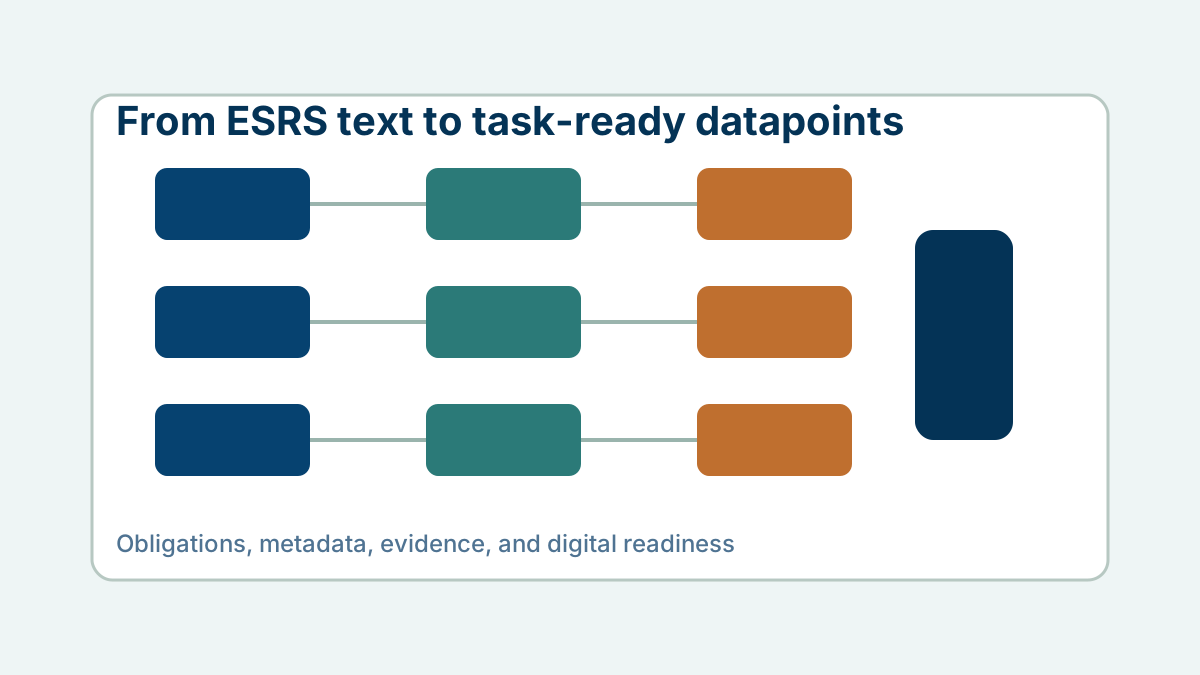
ESRS datapoints are often discussed as if the main challenge is volume. Volume matters, but the deeper challenge is translation. A datapoint becomes useful only when a company knows what question it answers, who owns the evidence, how the answer is reviewed, and where the decision is recorded.
That is why ESRS preparation should not start as a giant spreadsheet alone. A spreadsheet can list requirements, but it rarely captures judgement, uncertainty, review history, or the difference between "not applicable" and "not yet evidenced."
A Datapoint Is Not Yet A Disclosure
A datapoint is a prompt. A disclosure is the result of several decisions:
- whether the topic is in scope;
- whether the information is material;
- which entity boundary and reporting period apply;
- which internal team owns the data;
- which evidence supports the answer;
- who reviews the result before publication;
- whether the information must be tagged or otherwise prepared for digital reporting.
When those steps are skipped, reporting teams can produce answers that look complete but are difficult to defend.
Ownership Is The Hidden Problem
Many sustainability topics cross functions. A climate datapoint may involve operations, procurement, finance, legal, and external advisers. A workforce datapoint may involve HR, payroll, compliance, and local management. A governance datapoint may require board materials and policy records.
The practical reporting task is therefore not "fill the field." It is "build a reliable route from the question to the owner, evidence, review, and final disclosure."
What A Good Workflow Captures
For each disclosure item, companies should capture:
- the responsible owner;
- the reviewer;
- the evidence type;
- the data source;
- the reporting period;
- open assumptions;
- known gaps;
- review status;
- digital reporting implications.
This creates a reporting system that can survive personnel changes, standard updates, and assurance questions.
Why Digital Readiness Matters
Digital reporting makes loose interpretation harder to manage. If sustainability statements need to be tagged, a company must know not only what it wants to say, but also how the information connects to structured reporting logic.
That does not mean every sustainability team needs to become a technical tagging expert. It means disclosure preparation should preserve enough structure for finance, reporting, and technical teams to work from the same understanding.
Practical Takeaway
ESRS readiness is not simply a compliance checklist. It is a management exercise in ownership, evidence, review, and traceability. Companies that build those foundations early will be better prepared for both narrative reporting and digital reporting.