
DataSolmu blog
ESG Data Quality Is Decision Risk
A learning note on ESG data trust, ratings, alternative data, automated analysis, and the risk of confident decisions from weak information.
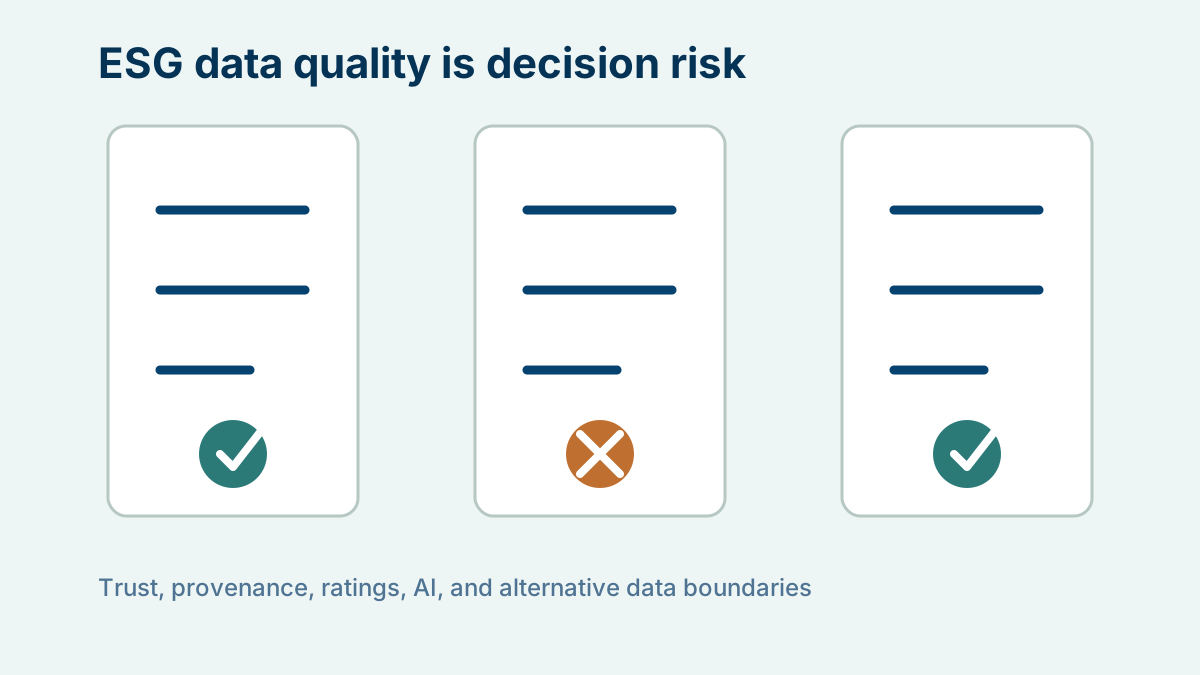
ESG data is often discussed as if more data automatically leads to better decisions. In practice, weak ESG data can create false confidence. The risk is not only that a number is wrong. The risk is that a decision is made from information whose source, boundary, method, or meaning is unclear.
That makes ESG data quality a management issue, not only a reporting issue.
What Makes ESG Data Useful
Useful ESG data has context. A datapoint should answer:
- where it came from;
- which entity or site it covers;
- which period it covers;
- which method was used;
- who owns it;
- who reviewed it;
- what limitations apply;
- whether it is comparable to prior periods or peer information.
Without that context, a datapoint may be informative in one setting and misleading in another.
Ratings Are Signals, Not Final Answers
ESG ratings can be helpful, but they are not a single objective truth. Providers may use different methods, weights, data sources, issue definitions, update cycles, and sector assumptions. A rating can be useful as a signal, but it should not be treated as a substitute for understanding the underlying evidence.
The same caution applies to alternative data. Satellite data, media signals, supply-chain indicators, or external datasets can add perspective, but they still need interpretation.
The Automated Analysis Challenge
As analytical tools become more fluent, weak data can look more convincing. A polished explanation may hide thin evidence. That makes data provenance even more important.
Before using ESG data in analysis or communication, teams should ask:
- Is this data current enough?
- Is the boundary right for the decision?
- Are we comparing like with like?
- Does the method support the conclusion?
- Are assumptions visible?
- Would a reviewer understand the evidence?
These questions reduce the risk of confident but unsupported conclusions.
Practical Takeaway
The most dangerous ESG data is not always missing data. Often it is unexamined data. Companies should treat ESG data quality as decision risk: a question of provenance, method, governance, and context.