
DataSolmu blog
Climate Disclosure Progress Needs an Evidence Backlog
Why climate disclosure progress still needs controlled evidence, transition, and review workflows.
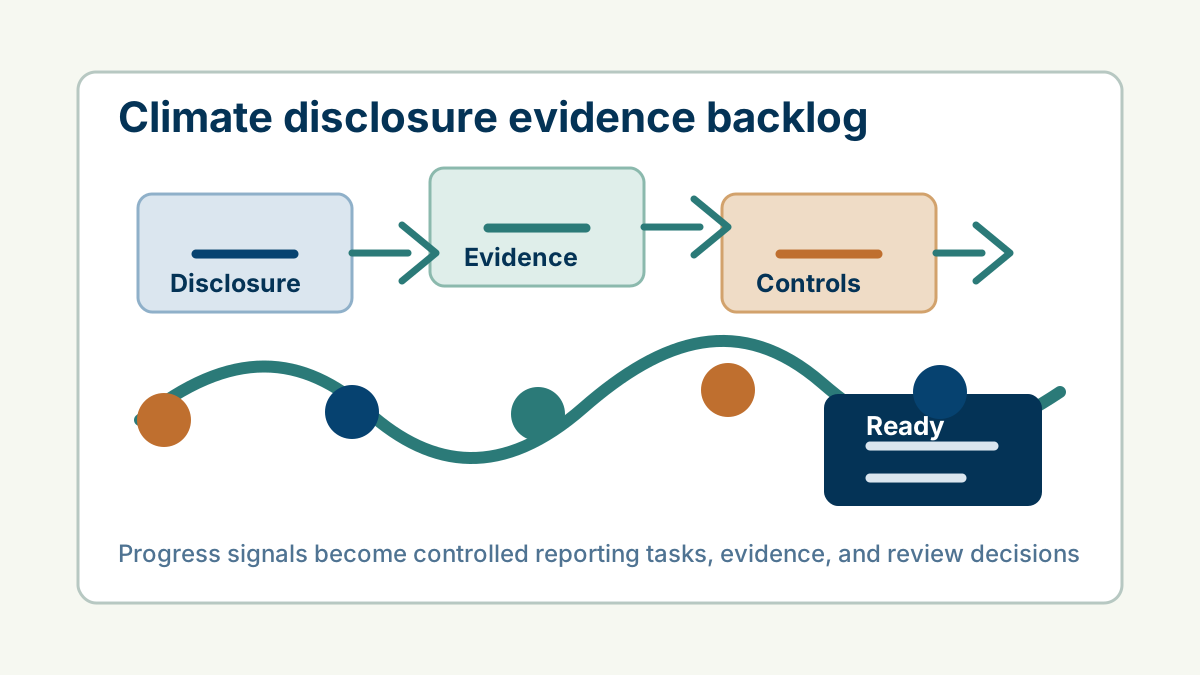
Climate disclosure is becoming more common, but common is not the same as complete. The IFRS Foundation's 2024 progress report shows a market in transition: many public companies now disclose at least some climate-related information, more companies are referencing ISSB Standards, and regulators are moving climate disclosure into formal frameworks. At the same time, only a small share of companies disclose across the full TCFD set.
For reporting teams, that gap is the practical point. Progress creates expectations. It does not remove the need for evidence, controls, review discipline, and clear transition planning.
Treat Progress As A Backlog
A climate disclosure programme should not only ask whether the company has published something. It should identify which disclosure areas are mature, which are partial, and which still need evidence.
That turns external progress into an internal backlog. The backlog should distinguish:
- governance records that show oversight and decision ownership;
- strategy records that connect climate risks and opportunities to business planning;
- risk-management records that show identification, assessment, and monitoring methods;
- metrics and targets records that preserve boundaries, methods, assumptions, and changes;
- transition-plan records that connect commitments to actions, dependencies, and review dates.
This is more useful than a generic readiness score. A score can hide weak areas. A backlog shows exactly what must be assigned, evidenced, reviewed, or escalated.
Move From TCFD Familiarity To ISSB Control
The TCFD recommendations gave many companies a familiar structure for climate-related financial disclosure. ISSB Standards build on that structure, but the move from familiar recommendations to standards-based reporting should be managed as a controlled transition.
The transition is not only a wording update. It can affect materiality judgements, disclosure location, governance sign-off, financial-effects analysis, metrics definitions, transition reliefs, digital reporting preparation, and assurance expectations. A company that already reports against TCFD themes still needs to check whether its process can support ISSB-oriented requirements.
A practical transition record should capture:
- which prior TCFD-aligned disclosures are being reused;
- which disclosures need new evidence or tighter review;
- which methods changed and who approved the change;
- which assumptions are still uncertain;
- which disclosure claims have been reviewed for overstatement risk.
This is where climate reporting becomes operational. The company needs a record of how the reporting basis changed, not just a new label on the same content.
Connect Climate Disclosure To Financial Reporting Review
Climate-related disclosure becomes more sensitive when it sits near financial statements, management commentary, governance reporting, and investor information. Reporting teams need to explain how climate risks, opportunities, assumptions, estimates, impairments, capital plans, and strategy narratives have been considered together.
That does not mean every climate topic becomes a financial-statement number. It means the review trail should make the connection visible. If a material climate assumption appears in one part of the annual reporting package, reviewers should be able to see whether related financial reporting judgements were considered.
Useful evidence records include:
- the climate matters considered in financial reporting discussions;
- the basis for deciding whether a matter affects recognition, measurement, disclosure, or narrative reporting;
- the owners of climate and finance inputs;
- the review dates and sign-off points;
- the unresolved questions that require leadership, legal, finance, or assurance input.
Varmennappi-style workflows can help here because the task is not only document production. The real value is preserving the path from requirement to judgement, from judgement to evidence, and from evidence to disclosure.
Monitor Regulation Without Losing Applicability
Climate disclosure rules are moving at different speeds across jurisdictions. Some markets use TCFD-aligned requirements, some are adopting or adapting ISSB Standards, and some add local scope, assurance, format, or timing details.
For companies operating across markets, the danger is treating this as a single global headline. A regulatory tracker should preserve local applicability:
- which legal or regulatory requirement applies;
- which entities, listings, sectors, or thresholds are in scope;
- which reporting period is affected;
- where the disclosure must appear;
- whether assurance or digital tagging is required;
- which transition reliefs, local modifications, or additional requirements change the work.
That tracker should feed the evidence backlog. If a new rule changes scope, timing, assurance, or disclosure placement, the related tasks should update. Otherwise regulatory monitoring stays disconnected from the work needed to report.
Make Review Method Transparent
Climate-disclosure progress reports often rely on structured review methods. Companies should take the same lesson into their own reporting processes: conclusions are easier to trust when the method is visible.
That means documenting what was reviewed, what criteria were used, who reviewed exceptions, and where judgement was required. It also means separating presence from quality. A disclosure may exist, but still be too vague, unsupported, inconsistent with other reporting, or not ready for assurance.
For internal review, the useful questions are direct:
- is the disclosure backed by source evidence;
- are methods and assumptions current;
- are climate and finance narratives consistent;
- are targets and transition actions linked to owners and dates;
- are gaps tracked rather than hidden;
- can reviewers see why the company made each judgement?
This keeps the reporting process defensible without turning a public report into a copy of the underlying standard or review framework.
The DataSolmu View
The IFRS Foundation's progress report is useful because it shows both momentum and unfinished work. Climate disclosure has moved from voluntary learning into a more formal reporting environment, but many companies still need stronger evidence systems.
For DataSolmu, the product lesson is clear: climate disclosure readiness should be managed as a living evidence backlog. The system should connect regulatory triggers, reporting requirements, owners, evidence, assumptions, review comments, and disclosure status. It should also show where the company is relying on old TCFD habits and where ISSB-oriented reporting requires a stronger control.
That is how a reporting team moves from "we disclose climate information" to "we can show how the climate disclosure was prepared, reviewed, and improved."
Practical Takeaway
Climate disclosure progress should not make companies complacent. It should make the evidence gaps easier to see. Reporting teams need a controlled backlog for governance, strategy, risk management, metrics, targets, transition plans, financial-statement connections, and jurisdictional requirements. That backlog is what turns public momentum into reporting readiness.
Source
IFRS Foundation: Progress on Corporate Climate-related Disclosures--2024 Report